
Understanding Foot Side Pain: Causes and Solutions
Side foot pain, the ache that runs along the outside edge of your foot from the little toe back toward the ankle, is more common than most people realise. It can make walking the dog, standing through a shift, or even getting out of the car feel harder than it should. The good news is that most of it comes from soft tissue rather than anything serious, and there is a lot you can do about it at home.
Why the Outside of Your Foot Hurts
The outer edge of the foot is a busy area. It holds a cluster of tendons, a few small bones, and several ligaments that all absorb the load of every step you take. When any of them is overworked, pain tends to show up along that outer edge.
Peroneal tendonitis. The peroneal tendons run down the outside of the lower leg and wrap around the ankle bone. When they get irritated, usually from overuse or shoes that pinch, you feel it as a dull ache along the outer foot and just above the ankle.
Cuboid syndrome. The cuboid is a small bone on the outer midfoot. It can shift slightly out of place after a twist or a lot of running on hard surfaces, and it causes a sharp, localised ache that is easy to mistake for a sprain.
An old ankle sprain. If you have rolled your ankle before, the ligaments on the outside may have stretched and never fully tightened again. That leaves the outer foot working harder to stay stable, and pain can return long after the original injury has healed.
Stress fracture. Repeated impact from running, or a sudden jump in activity, can put tiny cracks in the long bone that runs to the little toe, the fifth metatarsal. This one hurts in a specific spot and tends to get worse the more you do.
Tight muscles. Sometimes there is no injury at all. Tight muscles in the foot and calf pull on the outer edge and create a general soreness that eases once the muscle releases.
How to Tell Them Apart
A few simple checks can point you in the right direction. If the pain eases after you warm up and returns after a long day on your feet, it is more likely tendon or muscle related. If it is sharp in one spot and gets worse the more you do, think bone or joint. And if the area is swollen, bruised, or you could not put weight on it after a fall or twist, treat it as a possible sprain or fracture and get it looked at.
What Helps at Home
Once anything serious has been ruled out, most soft tissue side foot pain responds well to a few consistent habits. Rest the foot when it flares, ice the sore spot for short periods, and ease back into activity rather than pushing through. Supportive shoes make a real difference, especially if you spend long stretches standing.
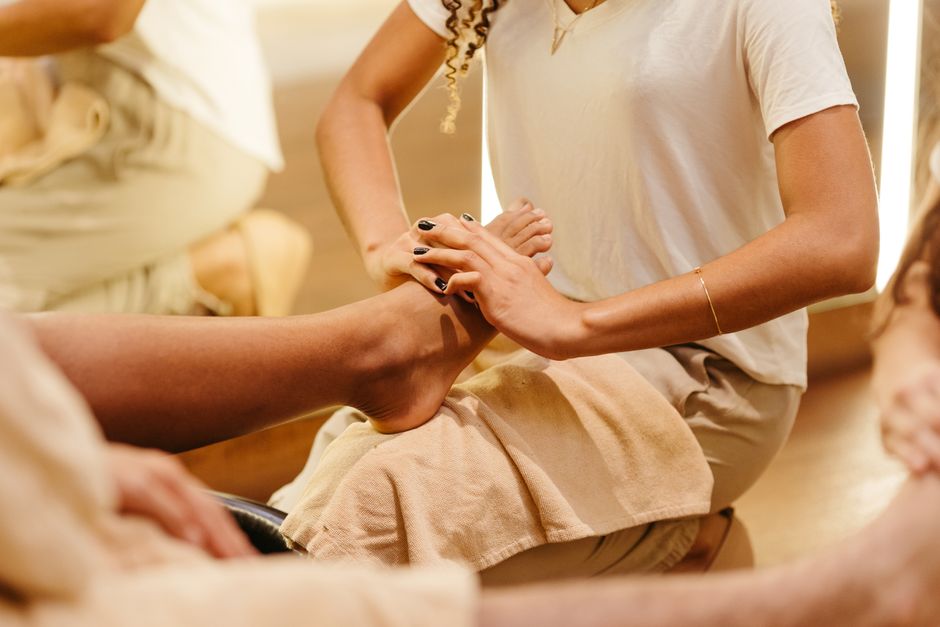
Massage helps soft tissue pain in a couple of straightforward ways. It increases blood flow to the area, which supports recovery, and it helps release tension in muscles that have tightened up in response to the pain [1]. Healthdirect Australia lists massage as a useful part of managing muscle soreness and improving circulation [2]. Sports Medicine Australia includes manual therapy alongside stretching and strengthening in its guidance for managing common foot conditions [3].
Why a Tool Beats Trying to Reach It Yourself
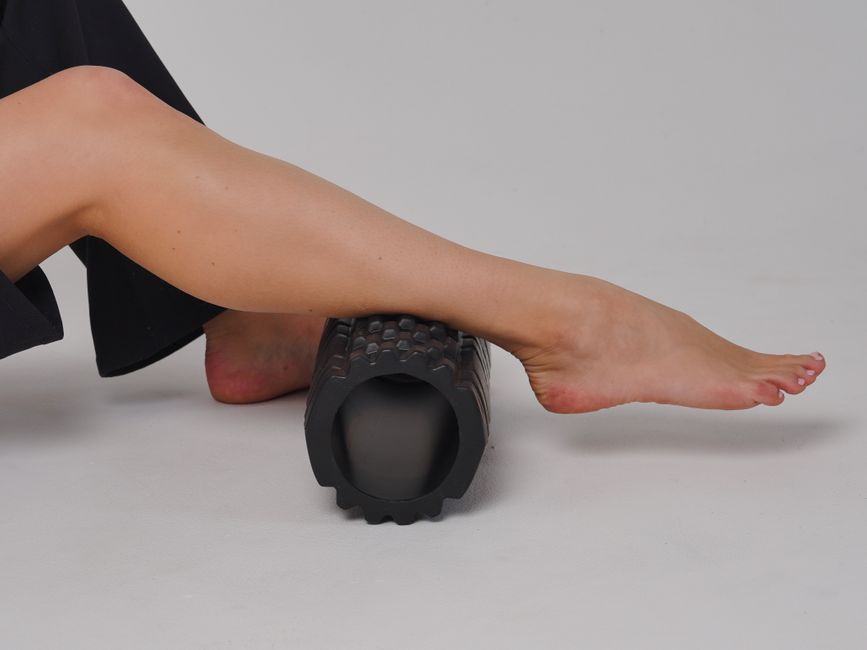
The catch with side foot pain is that it is awkward to reach. Bending over to work the outside edge of your own foot, or trying to hold steady pressure at the right angle, gets tiring fast. That is where a tool helps. The Kandwin 3-in-1 Foot Massage System has a deep tissue roller shaped to reach the side of the foot while you sit comfortably, so you can apply steady pressure to the outer edge without contorting yourself. It pairs that with a cold therapy step first, which helps settle inflammation before the deeper work begins.
When to See Someone
See a health professional such as a GP or podiatrist if the pain has not improved after a week or two of home care, if you cannot bear weight, or if you notice swelling, bruising, numbness, or tingling. Numbness and tingling in particular are signs the problem may involve a nerve rather than soft tissue, and that is worth a proper assessment.
Consistent daily care is what moves the needle. See the Kandwin 3-in-1 →
References
- Healthdirect Australia. "Massage therapy." Available at: https://www.healthdirect.gov.au/massage-therapy (Accessed: August 2026)
- Healthdirect Australia. "Foot care." Available at: https://www.healthdirect.gov.au/foot-care (Accessed: August 2026)
- Sports Medicine Australia. "Injury fact sheets." Available at: https://sma.org.au/resources-advice/injury-fact-sheets/ (Accessed: August 2026)
Disclaimer: This article is for informational purposes only and does not constitute medical advice. Always consult a qualified healthcare professional before starting any new treatment. If you experience severe or persistent pain, seek medical attention promptly. Individual results may vary.
Related reading: understanding foot side pain


