
Foot Pain Under the Arch: What It Means and What to Do
That sharp, burning sensation under your arch isn't random. It's a signal. And in most cases, the culprit is the plantar fascia , a thick band of tissue running from your heel to your toes that's become inflamed from overuse.
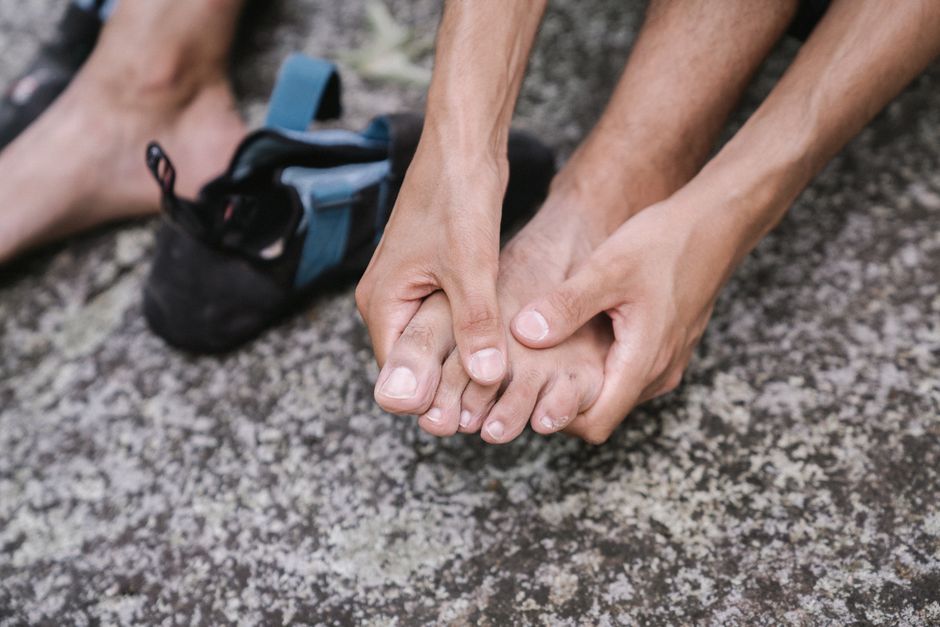
According to Healthdirect Australia [1], plantar fasciitis is the most common cause of arch pain, affecting roughly 1 in 10 Australians at some point in their lives. The pain typically sits where the arch meets the heel, but it can radiate through the entire midfoot. (Ferreira, 2014) [2]
Here's what's likely going on under your arch, and what you can do about it.
Why Your Arch Hurts: The Three Main Causes
1. Plantar Fasciitis. This is what most arch pain turns out to be. The plantar fascia acts like a shock-absorbing bowstring. When it's overloaded , by flat feet, high arches, tight calves, or worn-out shoes , micro-tears develop where it attaches to the heel. Sports Medicine Australia [3] notes that runners, people who stand all day for work, and those who've recently increased their activity levels are at highest risk.
2. Fallen Arches (Flat Feet). If your arch collapses when you stand, every step overstretches the plantar fascia. This isn't just a foot problem , flat feet can cascade into ankle, knee, and hip pain because your entire kinetic chain compensates for the lack of arch support.
3. Posterior Tibial Tendon Dysfunction. Less common but worth knowing about. The tendon that supports your arch becomes inflamed or torn. The tell-tale sign: pain that gets worse with activity and improves with rest, plus swelling on the inside of your ankle.
The Morning Test
How your arch feels when you first stand up tells you a lot. If the pain is sharpest in those first few steps and eases after 5-10 minutes , that's classic plantar fasciitis. The fascia tightens overnight while your foot is relaxed, then gets yanked when you stand up.
If the pain is constant all day regardless of rest, or if it throbs at night, it's more likely a tendon issue or something structural that needs a podiatrist's assessment.

What Actually Helps Arch Pain
Ice the arch. Healthdirect Australia recommends ice therapy [4] as a first-line treatment for foot pain. Roll your foot over a frozen water bottle for 2-3 minutes. This targets inflammation right at the source. Do it first thing in the morning and after any prolonged standing.
Stretch your calves, not just your feet. Most arch pain starts higher up the chain. Tight calves pull directly on the plantar fascia. Face a wall, hands flat, one foot back with heel down , hold for 30 seconds each side, twice a day.
Stop walking barefoot on hard floors. Every barefoot step on tiles or floorboards stretches the already-inflamed fascia. Wear supportive slides or shoes from the moment you get up.
Use targeted pressure. A general foot rub won't reach the deep adhesions in the plantar fascia. Find the tender spot , usually where the arch meets the heel , and hold steady pressure there for 10-15 seconds at a time. A 3-in-1 system combining cold therapy with acupressure and deep tissue massage handles this in one 6-minute session (2 minutes per roller).
Check your shoes. If you can fold your shoe in half with one hand, the midsole is dead , even if the upper looks fine. Replace runners every 500-800km and work boots every 6-12 months.
When to See Someone
If you've done the above consistently for two weeks with zero improvement, see a podiatrist. If your arch pain comes with numbness, tingling, or pain that radiates up your leg , book an appointment sooner. Those are nerve signals, not just fascia inflammation.
For most arch pain, consistent daily treatment works. The catch? You have to actually do it every day. That's where having a single tool next to your bed, ready to go in the morning, makes the difference between trying it for three days and actually recovering.
Having one tool next to your bed makes the difference between trying treatment for three days and actually recovering. See the Kandwin system →
References
- https://www.healthdirect.gov.au/plantar-fasciitis
- https://doi.org/10.1016/j.rboe.2014.03.012
- https://sma.org.au/resources-advice/injury-fact-sheets/plantar-fasciitis/
- https://www.healthdirect.gov.au/heel-pain
Disclaimer: This article is for informational purposes only and does not constitute medical advice. Always consult a qualified healthcare professional before starting any new treatment for foot pain. If you experience severe or persistent pain, seek medical attention promptly. Individual results may vary.
Related reading: foot pain under the arch: causes, foot pain under the arch
Alongside stretching, acupressure points on the foot can ease arch soreness between flare-ups.


